
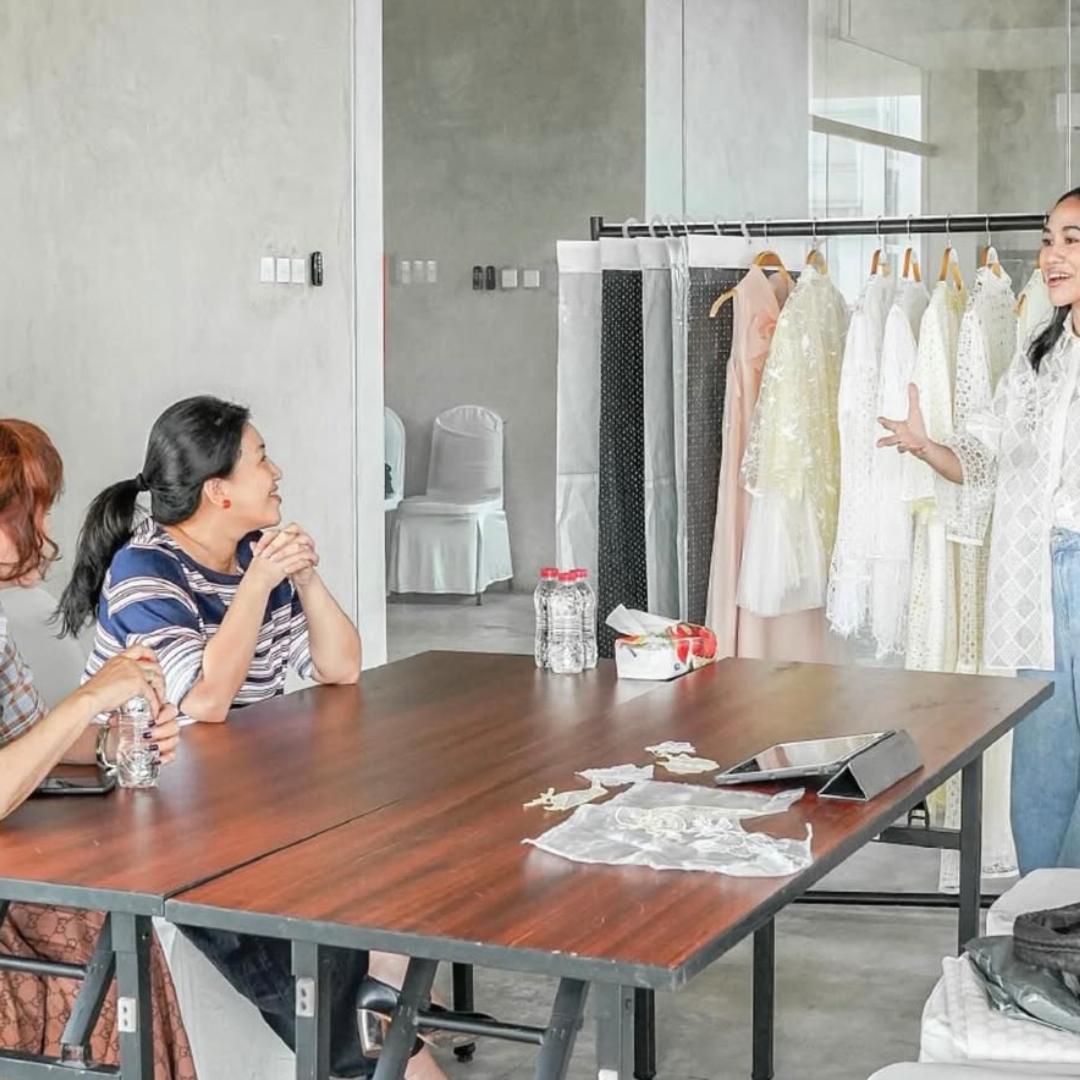
Photo: The moment where creative vision meets the PINTU mentoring session
17 March 2026
What Happens After Applications Close: Inside the PINTU Incubator Selection Process
Highlight
When the application window closes at PINTU Incubator, the real work begins. Each year, a wave of hopeful submissions arrives from across Indonesia, designers eager to grow their labels through one of the region’s most thoughtful fashion incubator programs. But entry into PINTU is not a matter of quick exposure or creative flair alone. Behind the scenes, a meticulous designer selection process unfolds, designed to identify Indonesian fashion brands capable of evolving beyond promising ideas into resilient, globally minded businesses.
In an industry often driven by speed and spectacle, PINTU approaches incubation with uncommon patience. Rather than accelerating designers toward immediate visibility, the program prioritizes reflection, cultural context, and disciplined development. The goal is to nurture brands that can grow steadily within a complex international fashion landscape, brands that carry both creative identity and structural readiness.

Photo : Every page counts, reviewing an incubee's lookbook during the 2nd Curation Incubator session in 2024.
These criteria form the backbone of the PINTU Incubator designer selection process, which evaluates applicants across several key dimensions:
- Product Concept Execution: Evaluating an ability to transform a concept into a well-developed, market-ready product.
- Collection Quality and Coherence: Reviewing whether the collection is mature, original, and aligned with the brand's identity.
- Material Selection: Examining how appropriately materials are chosen in relation to design, function, quality, and positioning
- Craftsmanship and Product Quality: Appraising the construction, finishing, and attention to detail demonstrated across the product.
- Uniqueness / Distinctive value: Assessing the brand has a clear identity and a distinctive value proposition
- Market Relevance: Examining the collection’s relevance and potential within its intended market.
The product, however, tells only part of the story. Equal weight is given to each applicant's submitted documents, assessed across five key dimensions:
- Brand Concept and Vision: Evaluating whether the brand concept is clear, relevant, and supported by a strong vision.
- Business Plan and Model: Considering whether the business plan is realistic, clear, and supports sustainable growth.
- Spring/Summer 2026 Design Sketches: Reviewing whether the sketches are relevant to the season and suitable for the international market.
- Development Potential: Assessing the applicant's potential to grow through the program.
- Commitment and Program Relevance: Assessing the applicant's seriousness, readiness, and relevance to the objectives of PINTU.
The result is a selection process that prioritizes depth over immediacy, an approach that sets PINTU Incubator apart from many other fashion incubator programs emerging worldwide.
Oversight of this process lies with a curatorial board composed of respected voices from across the fashion ecosystem. Their perspectives bridge creative practice, education, retail strategy, and cultural diplomacy, ensuring that each chosen brand reflects both creative strength and industry awareness.

Photo : Carol Meyer (Cultural Attaché at the French Embassy in Indonesia and Representative of Institut Français d'Indonésie)
The curators include Thresia Mareta, founder of LAKON Indonesia and co-initiator of PINTU Incubator; Carol Meyer, Cultural Attaché at the French Embassy in Indonesia and representative of Institut Français d’Indonésie; Susan Budihardjo, renowned Indonesian designer and founder of the Susan Budihardjo Fashion Institute; and Lydia Kartawidjaja, Merchandising and Marketing Director of STAR Department Store.
Together, they shape the curatorial direction of the program, reviewing submissions, discussing brand potential, and identifying designers ready to engage in a deeper process of creative and strategic development.
For Mareta, the philosophy behind this rigorous curation is straightforward: meaningful brands require time and self-understanding to emerge.
"This is something that simply cannot be built overnight,” she explains. Designers need to explore inward to understand what they truly want to do with their brand. What values do they genuinely stand for?".
Her perspective reflects a broader belief at the heart of PINTU Incubator, that a brand’s story is not something constructed after the fact. Instead, it is shaped through every step of the designer’s process: from concept development and material exploration to production and presentation.
“This isn’t just a story that is made up,” Mareta adds. “It’s a story that is executed through every step of the process.”
Another defining element of the program is its cross-cultural dimension. PINTU connects the fashion ecosystems of Indonesia and France, encouraging designers to move between heritage knowledge and contemporary global perspectives. Participants are invited to engage with Indonesia’s textile traditions, working with craft communities and exploring the cultural narratives embedded within local materials, while simultaneously expanding their understanding of international fashion systems.
This dialogue transforms the program into more than a typical fashion incubation program. It becomes a space where design research, cultural exchange, and brand strategy intersect.
For emerging Indonesian fashion brands, the process can be demanding. Yet it is precisely this rigor that gives the program its credibility. By the time designers enter the incubation phase, they have already demonstrated a willingness to think critically about their work, about where it comes from, and where it might go.
In an industry constantly chasing the next moment of visibility, PINTU proposes something quieter but far more durable: the idea that strong brands are built through reflection, discipline, and cultural awareness.
Because ultimately, the brands that endure are rarely those discovered overnight. They are the ones shaped patiently, long before the spotlight arrives.