

INCUBEES
 BW.jpg)
aldrie.orderonline.id
ALDRIE
Founded in 2015 by Aldri Indrayana, a graduate of The Fashion Institute Sydney, with further studies at Central Saint Martins and a background in engineering, Aldrie is a contemporary Indonesian fashion label that treats fashion as a convergence of art, business, and therapy. Born from the personal pressures of the sandwich generation, the brand transforms private anxieties and Indonesian cultural myths into sophisticated, wearable narratives: minimalist silhouettes with avant-garde detail, a signature layered black palette, and design references drawn from folklore and dark symbolism such as Kuntilanak motifs. Culturally, aldrie roots itself in Indonesia's textile heritage, integrating Batik and Tenun into unconventional design language across menswear, womenswear, and uniforms. Its sustainability commitment is both principled and internationally visible: the brand actively upcycles pre-loved items and repurposes plastic waste, a practice recognized on the global stage at Moscow's BRICS+ Fashion Summit. A member of the Indonesian Fashion Chamber and representative at the ASEAN Fashion Designers Showcase, aldrie's 2026–2028 roadmap includes waste recycling collaborations, international market expansion, offline pop-up stores, and the revival of its diffusion line andai by aldrie alongside a men's couture debut.
E-mail: [email protected]
Instagram: instagram.com/aldrieindrayana
WhatsApp: +6282230083003
Brand
Designer
toja.co.id
Toja House
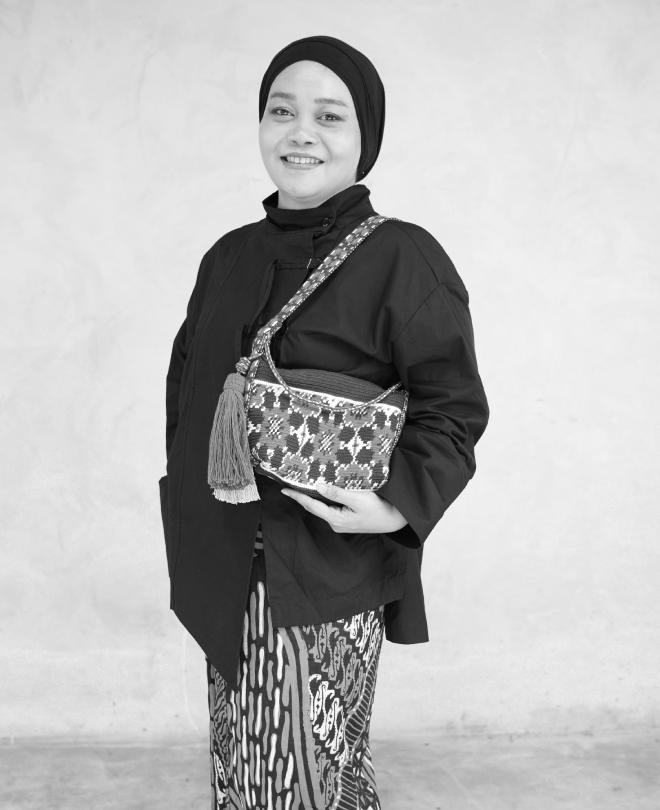
Founded by Dian Kartini and co-founder Iksiri Asna Utami in Yogyakarta, Toja House is a cultural craft house that transforms Indonesia's ancestral textile motifs, Kawung, Mamuli, Palawa weaving, Buna, and Noken, into contemporary handmade bags crafted by women artisans. Each piece functions as a collectible cultural artifact, preserving visual languages from across the archipelago while empowering the hands behind them. The brand's sustainability value lies in its slow production model and artisan-first ethos; its cultural value, in treating craft not as nostalgia but as living heritage with global relevance. Over three years, Toja House moves from market grounding (2026), pursue cultural collaborations and Southeast Asian market entry in 2027, and build intellectual property with deeper emotional connections with customers by 2028.
E-mail: [email protected]
Instagram: instagram.com/tojaindonesia
WhatsApp: +628112785900
www.ulurwiji.co.id
Ulur Wiji
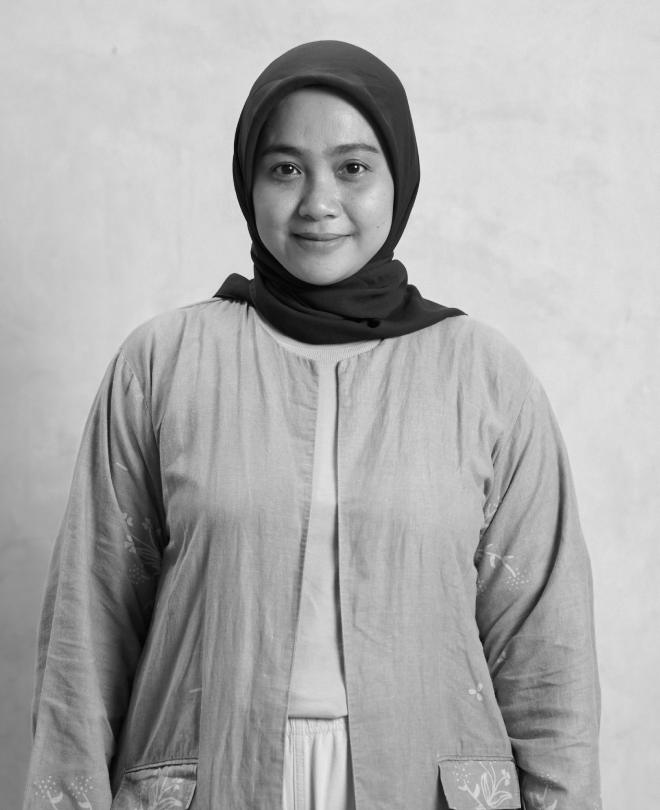
Ulur Wiji is a Mojokerto-based eco-fashion brand founded by Environmental Engineer M. Joko Santoso, with a team led by Nasta Rofika. The brand produces modest, ready-to-wear garments, including batik tulis, cap, and jumputan pieces, using exclusively plant-based natural dyes and certified natural fibers such as Oeko-Tex GOTS Organic Cotton and Lenzing Rayon. Its sustainability is science-backed: every material and process is selected to minimize carbon footprint, water pollution, and textile waste. Culturally, Ulur Wiji repositions batik as modern and timeless rather than traditional and formal, while directly empowering rural youth artisans in Pandankrajan Village under its motto "Dari Desa Bisa Berdaya." The three-year roadmap targets includes offline expansion and core positioning in 2026, commercial scaling and global export in 2027, and global showcase and brand authority by 2028.
E-mail: [email protected]
Instagram: instagram.com/ulurwiji
WhatsApp: +6282159644745
sausanofficial.com
Sausan Official
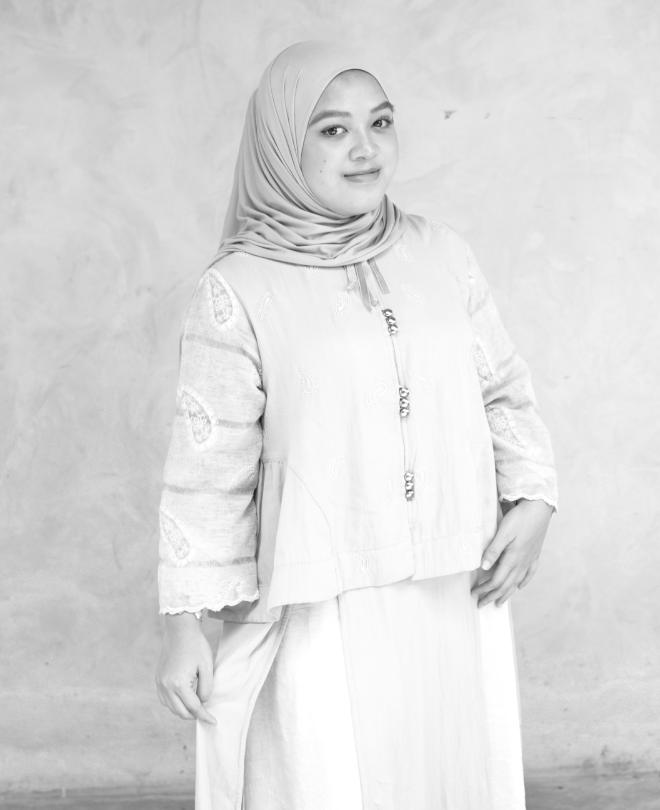
Founded in 2020 by Luthfia Amira, a Telkom University (Fashion Textile and Crafts) and Sparks Fashion Academy graduate, Sausan Hijab is a Bandung-based modest fashion brand producing premium linen womenswear: onesets, dresses, blouses, skirts, trousers, tunics, and outerwear, released in curated seasonal collections. Linen is the brand's material signature and sustainability statement, chosen for its durability, breathability, and natural biodegradability. Designs blend modest silhouettes with a cottagecore-rustic aesthetic, targeting professional Muslim women in major cities who value quality and understated elegance. Nationally recognized through JMFW 2024 and Gema Ramadhan SCTV event. The brand's three-year vision moves from establishing quality and premium value in 2026, to exclusive limited-edition concepts in 2027, to becoming a trailblazing force in Indonesia's fashion industry by 2028.
E-mail: [email protected]
Instagram: instagram.com/sausanofficial_id
WhatsApp: +6281382745576
tegepboots.com
Tegep Boots
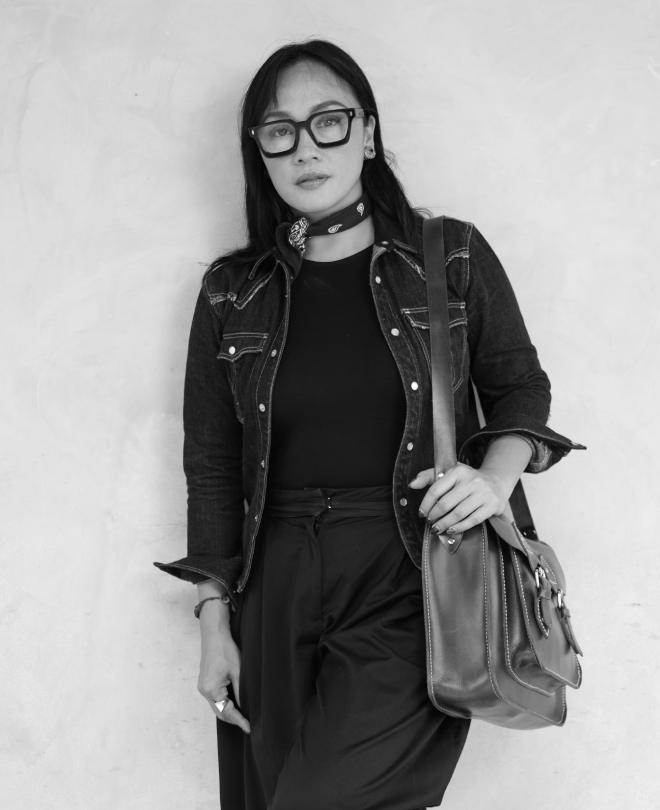
Established in 1997 by H. Tegep Oktaviansyah and now led by Etnawati Melani under PT. Tegep Karya Nagara in Bandung, Tegep Boots is one of Indonesia's pioneering handmade leather brands. Its products, bespoke boots, premium leather goods, and professional military-grade equipment, are entirely hand-crafted using centuries-old techniques, with each pair custom-measured to the client's anatomy. Beyond production, the brand carries institutional weight: the founder has served as jury for national design competitions, established APAI (the Indonesian Footwear Artisans Association), and most recently represented Indonesia at SIMAC Tanning Tech 2025 in Milan. Tegep Boots is a keeper of Indonesia's artisanal leather legacy, proving that handmade craftsmanship can meet global quality standards. The 2026–2028 roadmap targets increasing production capacity while maintaining handmade quality, strengthening its brand identity, expanding digital and e-commerce presence, and export market entry into the USA, Europe, UK, Japan, and Australia, and sustained job creation for local craftsmen.
E-mail: [email protected]
Instagram: instagram.com/tegep.boots
WhatsApp: +6282295553238

www.saulstudioofficial.com
Saul Studio
SAUL is a South Jakarta-based identity fashion label founded in 2013 by architect-turned-designer Debora Mettu, a Tarumanagara University Architecture graduate and Esmod Jakarta alumna. Drawing from her architectural background, Debora translates structural thinking and geometric precision into feminine, clean, and modern silhouettes, distinguishing the brand through limited releases, strong storytelling, and scalable multi-channel distribution under an affordable-premium positioning. SAUL targets professional women aged 25–45 who seek distinctive, character-driven fashion beyond generic retail wear, and has built its national and regional profile through participation in Fashion Week and Indonesia Designers Rising in Singapore. The brand is known for its quality tailored fabrics, precise pattern drafting, structural panel construction, and limited drop collections.
E-mail: [email protected]
Instagram: instagram.com/saul.studio
WhatsApp: +6281297530961
 BW.jpg)
www.andreannr.com
ANDREAN NR
ANDREAN NR is a Yogyakarta-based independent fashion label founded in 2019 by Andrean Nuur Ramadhan, a Spark Fashion Academy graduate, operating under the slogan "Made to Wear, Recycle, and For All of Us." The brand produces genderless ready-to-wear, including denim explorations and textile collaborations, with recycling embedded as a design methodology, not an afterthought. Its cultural value lies in bridging traditional Indonesian craft sensibility with contemporary, inclusive aesthetics that challenge gendered fashion norms. Showcased at Jogja Fashion Trend and Fashion Week, the brand is building a distinct voice within Indonesia's independent fashion ecosystem.
E-mail: [email protected]
Instagram: instagram.com/andrean.nr
WhatsApp: +6285954236675
 BW.jpg)
KRINS Studios
Founded by I Kadek Krisna Dwipayana, a graduate of Institut Seni Indonesia Bali, KRINS STUDIOS is a Bali-based cultural fashion brand built on one guiding philosophy: "Crafted With Nature, Inspired by Bali." The brand integrates Tenun Endek, natural dyes, zero-waste patchwork, and manual embroidery into modern silhouettes, producing casual wear that carry the depth of Balinese craft heritage without being confined by it. KRINS is not merely preserving tradition; it is actively repositioning Tenun Endek as a living design material with global relevance. Its sustainability framework is built on four pillars, Purpose, People, Planet, and Profit, ensuring that cultural integrity and environmental responsibility grow together. Recognized at the Dekranasda Bali 2025 Fashion Show, the brand is now charting an intentional path outward: solidifying its cultural brand identity in 2026, entering selected markets across Asia, Australia, and Europe in 2027, and establishing a flagship presence in Bali and Jakarta as a globally recognized cultural fashion label by 2028.
E-mail: [email protected]
Instagram: instagram.com/krinsstudios
WhatsApp: +6285792729465
 BW.jpg)
ESVARI
Founded by Berlianti Alamanda Prameswari Gondo Kusumo, an ESMOD Jakarta International Diploma graduate, ESVARI is a Jakarta-based high-fashion label named after the Sanskrit word for "The Empress." The brand produces sculptural statement pieces, corsets, embellished gowns, and high-impact formal wear, built from unconventional materials including borax crystal formations, resin, and dimensional textural surfaces, pushing garment-making into the territory of wearable fine art. Each collection is developed through a deeply narrative lens: designs are not simply worn, but immersed in, expressing strength, confidence, and elevated femininity as lived experience rather than aesthetic alone. Targeting high-end Gen Z and Millennial clients who seek exclusivity and emotional impact, ESVARI speaks to a generation that demands fashion with meaning. Its three-year roadmap moves from brand identity solidification and SS27 collection launch (2026), to international fashion week debut and the launch of diffusion line ESVARI FORM (2027), to a pop-up presence in Paris and positioning as a globally recognized collectible fashion label (2028).
E-mail: [email protected]
Instagram: instagram.com/esvvari
WhatsApp: +6285158041422
 BW.jpg)
DACIA
Founded by Daciadhia Phoebehana, a graduate of Binus Northumbria School of Design, DACIA is a contemporary fashion label built on meticulous craftsmanship and a deliberate design philosophy. The brand offers ready-to-wear, unisex, and bespoke collections, where cutting-edge silhouettes meet timeless elegance through a rich interplay of textures and colors, designed to move effortlessly from formal events to everyday life. Its unisex approach is not a trend but a value: inclusive, boundary-free, and reflective of how modern people actually dress and live. Guided by a deep commitment to sustainability and ethical practice, DACIA holds that beautiful fashion and conscious responsibility are not a compromise, they are a standard, extending across its full supply chain and production process. The brand is now on a deliberate growth trajectory: solidifying its creative identity in 2026, broadening reach and distribution in 2027, and stepping onto the global stage with full export readiness by 2028
E-mail: [email protected]
Instagram: instagram.com/dacia_____official
WhatsApp: +62818628989