
28 November 2025
Inside Palais Galliera: What PINTU Learned from Rick Owens’ Radical Vision
Highlight
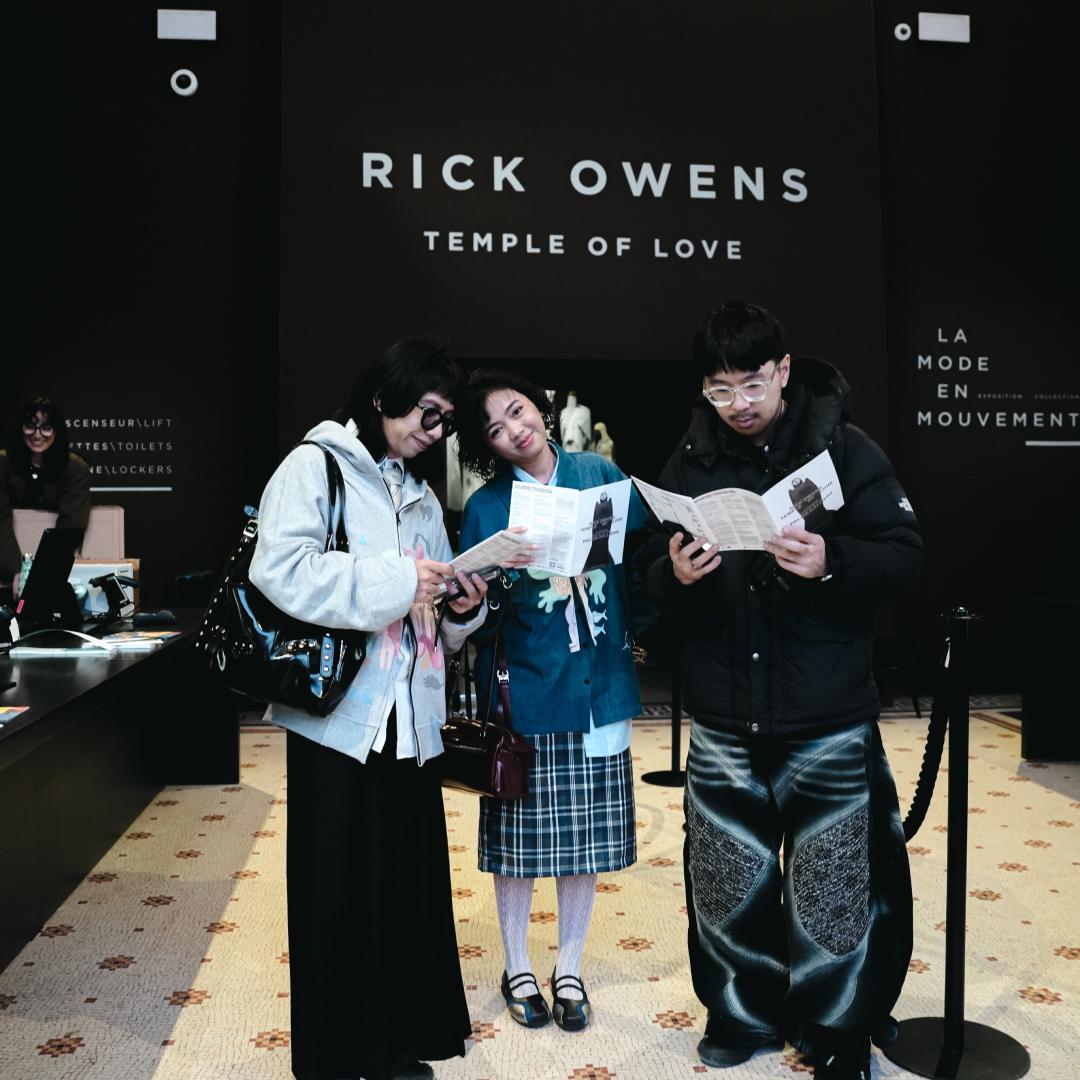
Paris has always been a city where ideas are stretched, broken apart, and reborn—and during PINTU’s Focus Week, that spirit crystallized inside Palais Galliera. Rick Owens’ avant-garde exhibition offered Indonesian designers and journalists far more than inspiration; it offered a framework for understanding fashion as a language built on truth, integrity, and human expression. This moment became one of the most defining experiences of PINTU’s Paris journey, revealing how creativity becomes powerful when it engages with philosophy rather than trends.
PINTU’s journey to Paris is never about attending the Paris Trade Show alone. It is about understanding Paris, studying the cultural forces, institutions, and artistic legacies that have shaped global fashion. Focus Week serves exactly this purpose: a curated immersion into exhibitions, ateliers, and archives that reveal how fashion evolves, survives, and communicates.
Where Fashion Speaks Like Art
In an interview with Wallpaper, Rick Owens stated:
“Clothes are powerful tools of communication, and we were put on Earth to communicate.”
Inside Galliera, this message became tangible. Owens’ monumental silhouettes, geometric volumes, and ritualistic draping transformed the body into a canvas and the runway into a philosophical space. His work blurs the line between garment and sculpture—proof that fashion can operate on the same emotional and intellectual register as contemporary art.

He continued:
“Fashion hasn’t replaced art, but it’s kind of up there… you have to speak to your audience with integrity, personality, and truth, year after year.”
For the PINTU cohort, this underscored a critical lesson: relevance is built through consistency and authenticity, not passing aesthetics. Owens’ garments do not simply cover the body; they articulate a worldview, question systems, and construct mythologies. The exhibition showed Indonesian creatives how fashion can exceed commercial function and become a vehicle for narrative and meaning.
And in that conversation, fashion becomes art.
Why This Moment Matters for Indonesian Designers

Many emerging designers chase style, but few chase intention. Inside Rick Owens’ radical universe, the PINTU delegates saw why intention is what endures. His work showed them that in a global Fashion Business landscape, a designer’s longevity depends not on trends, but on the clarity of their voice and the courage of their ideas.
As they moved through the exhibition, three lessons crystallized. First, fashion must express identity. Owens’ commitment to a singular, unapologetic worldview demonstrated how a defined point of view becomes a brand’s strongest signature. Second, innovation flourishes when fashion intersects with art. His sculptural silhouettes and boundary breaking forms reminded the participants that experimentation is not optional, it is part of a designer’s responsibility. Third, cultural storytelling drives global relevance. Just as Owens draws from myth, architecture, and subculture, Indonesian designers hold immense potential to craft powerful narratives by drawing from Nusantara craftsmanship, heritage textiles, and contemporary cultural energy.
These insights echoed the core of PINTU’s mission as a Fashion Incubator: guiding designers to craft messages, not just garments, while helping shape a sustainable and future-ready Indonesian creative economy. The visit pushed the cohort to reflect more deeply, What does integrity in design look like? How can Indonesian craftsmanship evolve into global storytelling? And ultimately, what truth does each designer want to communicate?
Owens’ exhibition became both provocation and permission: a reminder that meaningful innovation demands conviction and courage.
Connecting the Lessons Back Home

Through Focus Week Paris, PINTU continues to build bridges between Paris and Jakarta, heritage and innovation, artistry and industry. These experiences ensure that Indonesian designers understand the global language of fashion, and learn how to contribute a voice that is distinctly, confidently their own.
For the PINTU cohort, Palais Galliera sparked a decisive shift. It showed that Indonesian design can enter global conversations not by imitation, but through interpretation. Fashion diplomacy begins with understanding how the world speaks, then responding with a truth rooted in one’s own culture.
This is the worldview PINTU seeks to cultivate: designers who innovate with courage, craft with intention, and create with purpose, designers who do not simply make products, but articulate meaning.
Join PINTU and Cultivate Your Expertise in Fashion Innovation.