
14 November 2025
Global Learning Journey: PINTU Visits École Duperré and IFM Paris
Highlight
PINTU proudly continues its mission to strengthen Indonesia’s global creative ecosystem through real-world exposure and international collaboration. In its recent Global Learning Journey to Paris, PINTU brought a group of emerging Indonesian designers to two of the world’s most influential fashion schools, École Duperré Paris and Institut Français de la Mode (IFM), ,marking another important milestone in building Indonesia’s competitiveness in the global fashion landscape. This learning journey reflects PINTU’s belief that world-class creativity grows when education, cultural exchange, and experimentation come together. Through this experience, participants gained not only knowledge, but also a renewed perspective on how Indonesia’s Fashion Incubator ecosystem can rise within the global fashion landscape.
The first stop, École Duperré Paris, opened a rare window into how France cultivates young creative talent. PINTU delegates explored textile laboratories, accessory ateliers, and studios where students develop ideas through research, driven experimentation. The school’s commitment to multidisciplinary learning allowed the Indonesian participants to witness a model where craftsmanship, contemporary thinking, and cultural literacy intersect. It offered a benchmark for what future-oriented fashion education looks like, rigorous, imaginative, and grounded in artistic depth.

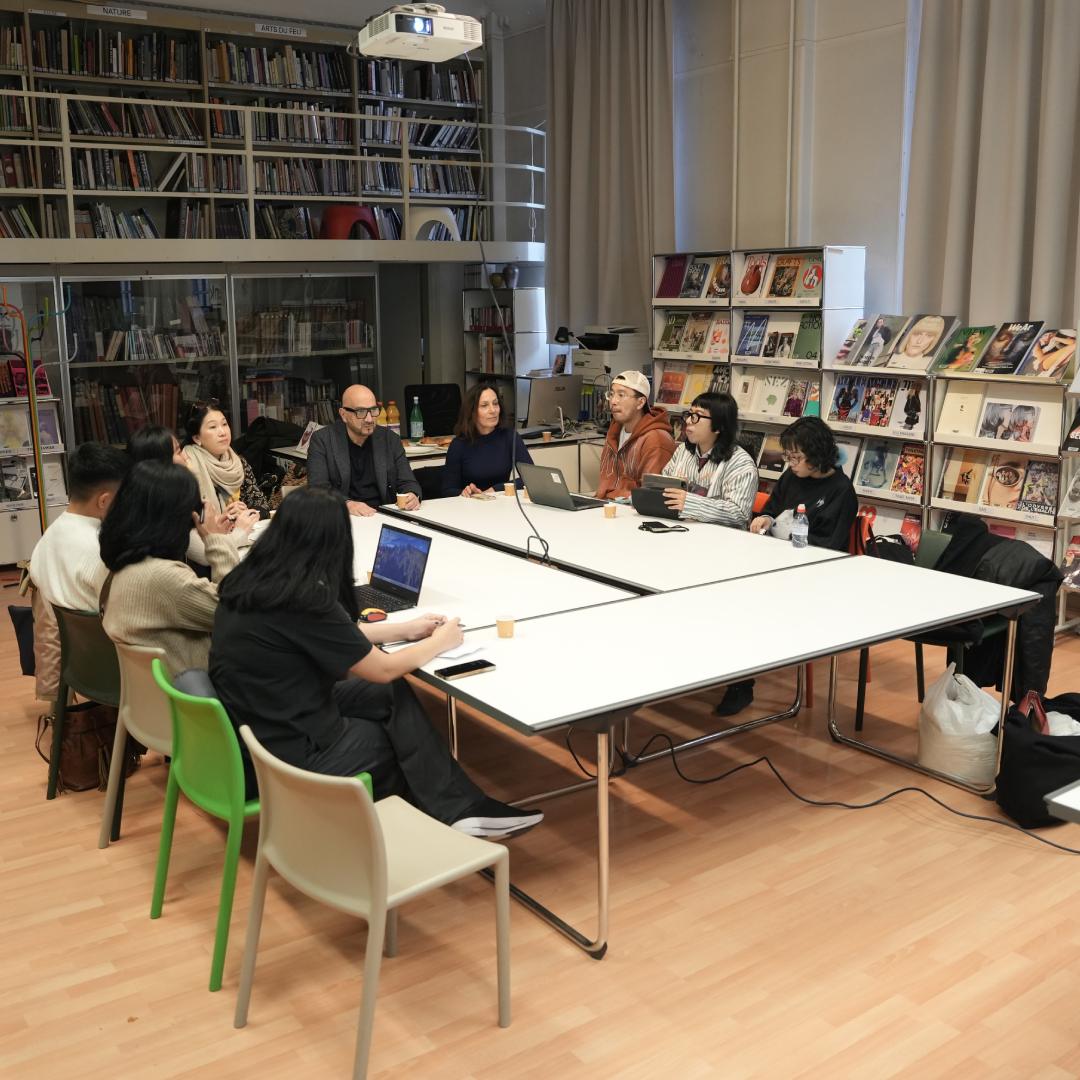
A highlight of the visit came through an intimate sharing session with Antoine Kruk, the celebrated Franco-Japanese artist whose work spans haute couture, illustration, opera costumes, and collaborations with the world’s prestigious fashion houses, from Thierry Mugler and Roberto Cavalli to Louis Vuitton and Olivier Theyskens. For the PINTU cohort, learning directly from Antoine became an immersive masterclass—one that strengthened their narrative, emotional, and conceptual design skills. This aligns with PINTU’s purpose of developing a skill-building fashion program Indonesia can rely on to prepare globally competitive creators.

The journey continued at Institut Français de la Mode (IFM), one of the most respected institutions in international fashion education. IFM is known for shaping designers who understand both creativity and business, a balance essential in today’s global fashion economy. PINTU delegation observed how the school integrates technical excellence with strategic thinking, preparing students for the complexities of fashion management, brand building, and industry innovation. This exposure mirrors PINTU’s vision of developing Indonesian designers who are creatively strong, business-ready, and globally competitive within the wider Fashion Business environment.
For many participants, the trip sparked important shifts in perspective. Witnessing how French institutions blend craft, culture, and commerce pushed them to rethink how their own brands could evolve within Indonesia’s creative economy. They described the experience as a reminder that sustainable fashion ecosystems are built not only through talent, but through global awareness, curiosity, and discipline.
Reflecting on the journey, Thresia Mareta, Co-Founder of PINTU, shared: “This PINTU journey in Paris was filled with meaningful meetings, real connections, and new experiences. Through the PINTU Program, we’ve built a family, one that now lives between Paris and Jakarta.”
By creating access to world-class institutions like École Duperré and IFM, PINTU strengthens its position as a leading Fashion Incubator in Indonesia, one that champions cultural exchange, and supports designers through impactful global learning experiences. This initiative demonstrates how fashion education partnership Indonesia can be elevated to meet international standards.