
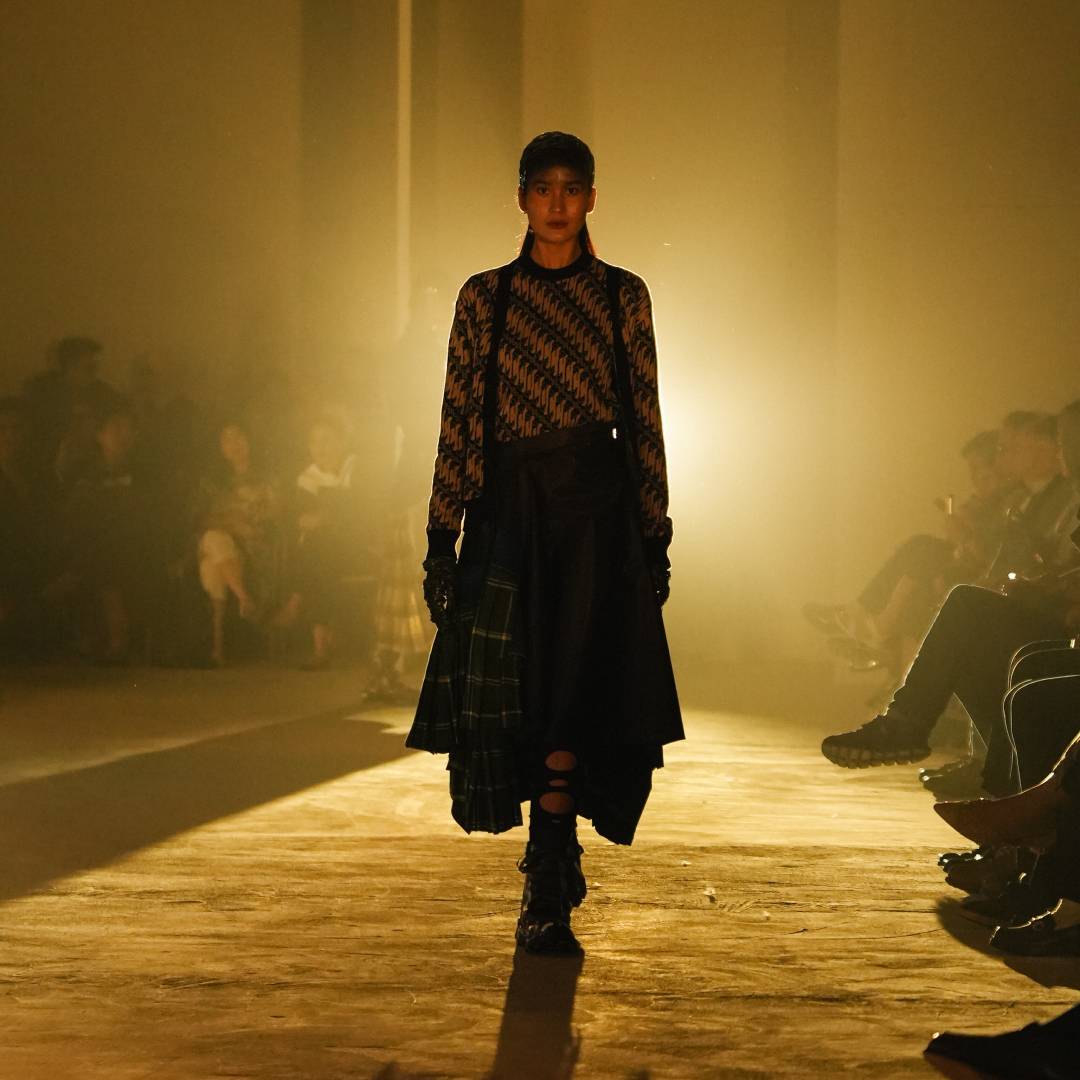
Photo: Models walking a dramatic runway at JF3 Fashion Festival, fashion show as cultural platform
1 April 2026
Beyond Spectacle: Why the Fashion Show Is the Most Powerful Cultural Platform of Our Time
Highlight
Every season, the ritual begins again. Editors take their seats. Cameras crowd the runway's edge. Models move through carefully lit spaces in Paris, Milan, New York, London. To the uninitiated, it reads as glamour for its own sake, an expensive, rarefied performance built around clothes most people will never wear.
But that reading misses the point entirely. Fashion shows have never been only about clothes. They are cultural events in the fullest sense: compressed, theatrically precise moments where aesthetics collide with ideas about identity, aspiration, and the direction of the era. The runway is where culture doesn't merely get reflected. It gets produced.
The Runway as a Global Taste-Making Machine
Fashion weeks are the industry's most influential cultural infrastructure, not just commercially, but ideologically. A single show can generate media exposure valued at millions of dollars, setting off an economic chain that extends well beyond the venue: photographers, stylists, editors, hospitality, local creative economies, and eventually retail.
Hilmy Faiq, senior journalist and Culture Desk Editor at Harian Kompas, Indonesia's most widely read national newspaper, maps this dynamic clearly: "Events such as fashion weeks in Paris, Milan, and New York function as global trend launch centers as well as major marketing tools for fashion houses. A single runway show can generate media exposure worth millions of dollars, triggering an economic chain involving photographers, media, hospitality, creative workers, and retail."
But the cultural infrastructure is just as consequential as the commercial one.
Through live streaming and social media, the exclusivity that once defined the front row has dissolved. What was previously accessible only to a closed circle of insiders now unfolds as a real-time global event, consumed simultaneously by millions. The runway no longer just promotes garments, it broadcasts entire visions of how to live, who to be, and how to be perceived.

Photo: Baek Ju-hee taking a bow after a runway show, fashion as artistic expression and social commentary
A Laboratory for Public Taste
The runway's influence on everyday life rarely operates immediately. It works gradually, circulating through media, editorial coverage, and cultural osmosis before landing in wardrobes and self-presentation.
As Hilmy Faiq observes: "Events on the runway today often influence how people dress several seasons later, the colors, silhouettes, even attitudes toward the body and identity. At that level, fashion shows become a cultural laboratory in shaping public taste."
This is the runway functioning as a testing ground, a space where visual ideas are introduced, debated, and eventually absorbed into the mainstream. It is not passive reflection. It is an active production of cultural meaning.
Artistic Statement, Not Just Product Presentation
Some designers have always understood this. Alexander McQueen built shows that functioned closer to theater than product launch. Rei Kawakubo of Comme des Garçons has spent decades using the runway to challenge settled assumptions about the body, beauty, and gender. Iris van Herpen merges fashion with technology and ecology in ways that raise genuinely philosophical questions about the future of human form.
These are not marketing exercises dressed up as art. They are cultural arguments, made entirely without words, expressed through movement, material, and spatial design.
"Designers often use the runway as a space to express ideas about the times," Hilmy Faiq notes. "Fashion shows can become a visual medium that delivers social critique without relying on words."
When used with this kind of intention, the runway carries the critical weight of a gallery exhibition or an essay, with a far broader, more immediate reach.

Photo: Editorial photography capturing audience and runway, fashion shows as modern cultural ritual
Fashion Show as a Modern Cultural Ritual
Anthropologists have long described ritual as the mechanism through which communities define shared values and locate themselves in time. Traditional ceremonies, seasonal festivals, collective gatherings, these are the spaces where cultures have historically made meaning together.
Urban societies haven't abandoned that need. They've redirected it.
"Where societies once gathered in traditional festivals or ceremonies to celebrate shared values," Hilmy Faiq observes, "urban communities now have a new stage for reading the signs of their era. On the runway, economics, aesthetics, and ideas about humanity converge in a single brief performance, mapping the direction of both culture and style."
The fashion show, in this light, is a ritual of modernity. It tells us where we are. It reflects what we're willing to question. And season after season, it maps the cultural terrain we're moving through.
Culture as Foundation, Not Backdrop
For emerging designers entering this ecosystem, grasping the cultural dimension of fashion, not just the commercial mechanics, is what separates those who participate in industry from those who shape it. A collection is a product. A runway moment, conceived with clarity and intention, is a cultural contribution.
This distinction is where fashion incubation becomes essential: not only as business support, but as the environment where designers learn to situate their work within a larger global conversation, to understand not just how to make clothes, but what those clothes are saying, and to whom.
At PINTU Incubator, the conviction is that the most compelling brands operate at the intersection of aesthetics, identity, and industry, and that the thinking that happens before the lights go up is what determines whether a brand is ready to stand in that space.
The runway is the most visible expression of fashion's cultural power. But what precedes it, the clarity, the positioning, the cultural intelligence, is what makes the moment matter.
Explore more insights on fashion, culture, and industry perspectives through PINTU :